We were promised that AI would be the “Easy Button” for engineering. Instead, I’m seeing something else: my highest-performing leads and managers are reporting a level of fatigue that feels different from standard burnout. They aren’t just tired; they’re depleted.
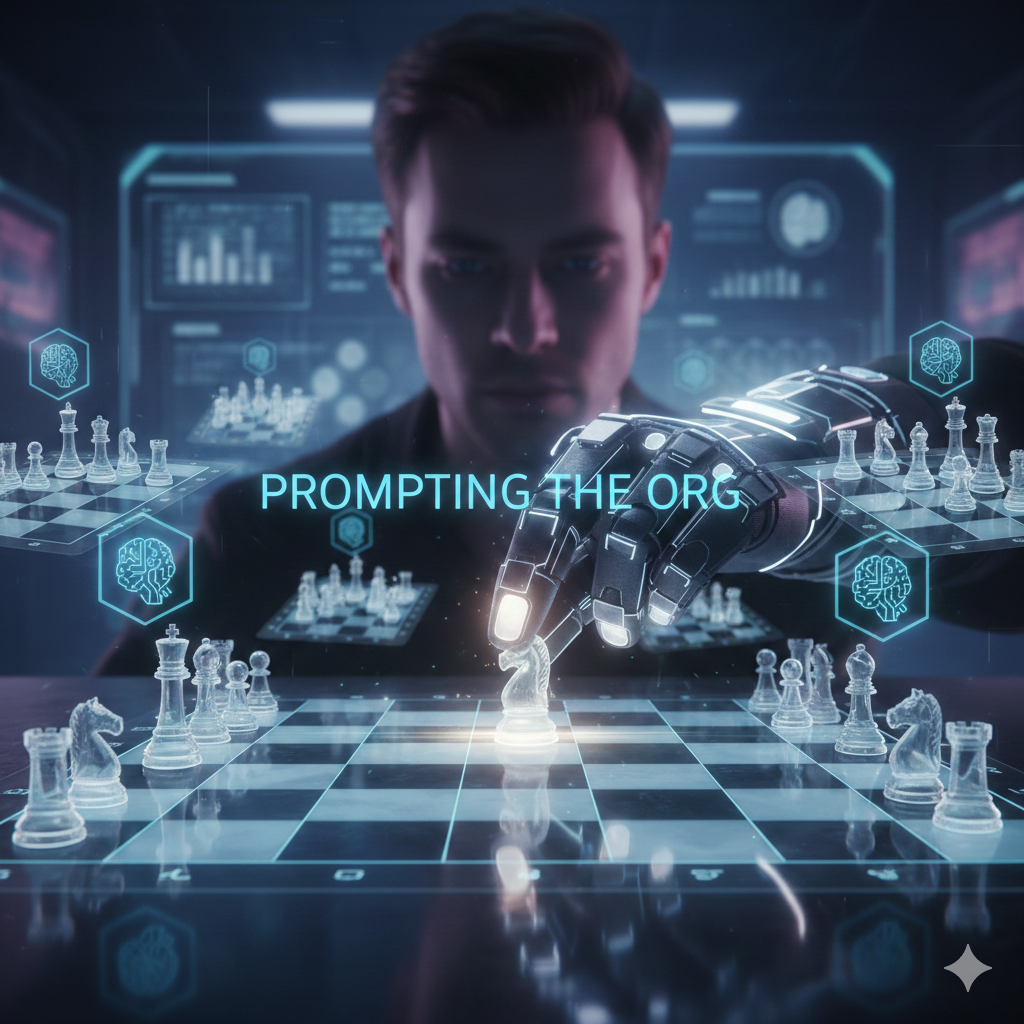
I recently heard a brilliant analogy for this: Using AI agents is like a Grandmaster playing 20 games of chess simultaneously. On paper, the Grandmaster is “20x more productive”. But look closer at the board. They aren’t just playing; they are context-switching at a terminal velocity.
The “Reviewer’s Tax”
When an engineer writes code, they are in “Flow State.” They build the mental model, piece by piece. It’s hard work, but it’s linear. When that same engineer uses three different AI agents to generate a PR, they shift from Creator to Auditor. They are no longer building the house; they are the site inspector walking through a house built in five minutes by a hyperactive robot.
They have to:
-
Verify the logic (is this actually solving the problem or just looking like it?)
-
Check for hallucinations (did the agent just invent a library?)
-
Ensure architectural alignment (does this “perfect” code actually fit our legacy mess?)
The Grandmaster Problem
In a simultaneous exhibition, the Grandmaster isn’t just making moves. They are maintaining 20 different mental maps.
For the modern Engineering Manager or Lead, the “agents” are both their opponents and partners. You’re prompting dev agent on one screen, a planning agent on another, and reviewing a generated test suite on the third. Engineers are working multiple taxing problems at once, context switching, and then also being overloaded with pull request reviews from their peers who are doing the same thing.
The cognitive load isn’t reduced; it’s compressed. You’re doing the deep thinking for five different workstreams in the time it used to take to do one. While this can be a productivity gain I fear there is a cognitive debt that will eventually be paid back in the form of burnout.
What This Means for the Org
As leaders we need to be aware, and look out or measure the fatigue of our engineers and managers. As we ride this wave, we have to be making sure our most valuable assets - the people with the judgement and experience to know when the AI is wrong - are able to catch the next wave too. I worry as my team’s pace of onboarding to use AI tools increases, we might see our top talent accelerate towards burnout and not catch it in time to stop it.
Are you seeing your team burning out? Anything you have learned that would help me avoid this?