So far in my career, our value as leaders was measured by how well we manage the machine - optimizing for velocity, smoothing out team dynamics, and ensuring predictable delivery of business goals. Now, the engine of that machine is changing.
For the past few months a part of me is feeling some existential dread - with AI advancing so quickly the fundamental engine of the machine is changing. A lot of the discussion has been on 10x or 100x engineers, but what is this going to mean for Engineering Managers? Do we still need the role? If we do, what does an Engineering Manager in the future look like? The future - maybe I mean now…
I think it’s too early to declare the death of the manager but I am ready to place a few definitive bets on changes that are coming.
Firstly Engineering Managers who don’t stay on top of AI developments will become obsolete. The ‘wait and see’ approach has become a ‘wait and become obsolete’ strategy. Within a performance cycle or two I predict we’ll quickly be able to identify which of our managers are leveraging AI tools and which ones are not through their impact. If you aren’t “debugging” your own management style to include AI, you’re essentially running a legacy monolith in a cloud-native world.
Secondly the role of “coordination” that Engineering Managers often assume will become obsolete. Coordination - the manual act of bridging the gap between what is happening and who needs to know - is no longer a human-scale task. It’s an agentic one. If your value is purely ‘coordinative,’ you are competing with a script that doesn’t sleep. With that in mind, I think Engineering Managers will be able to spend more time on higher value tasks - people and technical strategy. With velocity increasing it’ll be more important than ever that Engineering Managers double down on coaching, navigating disputes, building cohesion and growing their team members. With less time coordinating, Engineering Managers can be the ones stepping back and spending more time on technical strategy - defining which systems to build and how they integrate, rather than just overseeing the people building them.
Liquidating the “Management Tax”
Today, much of an Engineering Managers day is spent on what I call “Management Tax”: the manual toil of status updates, chasing Jira tickets, and drafting snippets.
AI is about to liquidate that debt. What a time to be alive - this is the most unfulfilling part of our jobs.
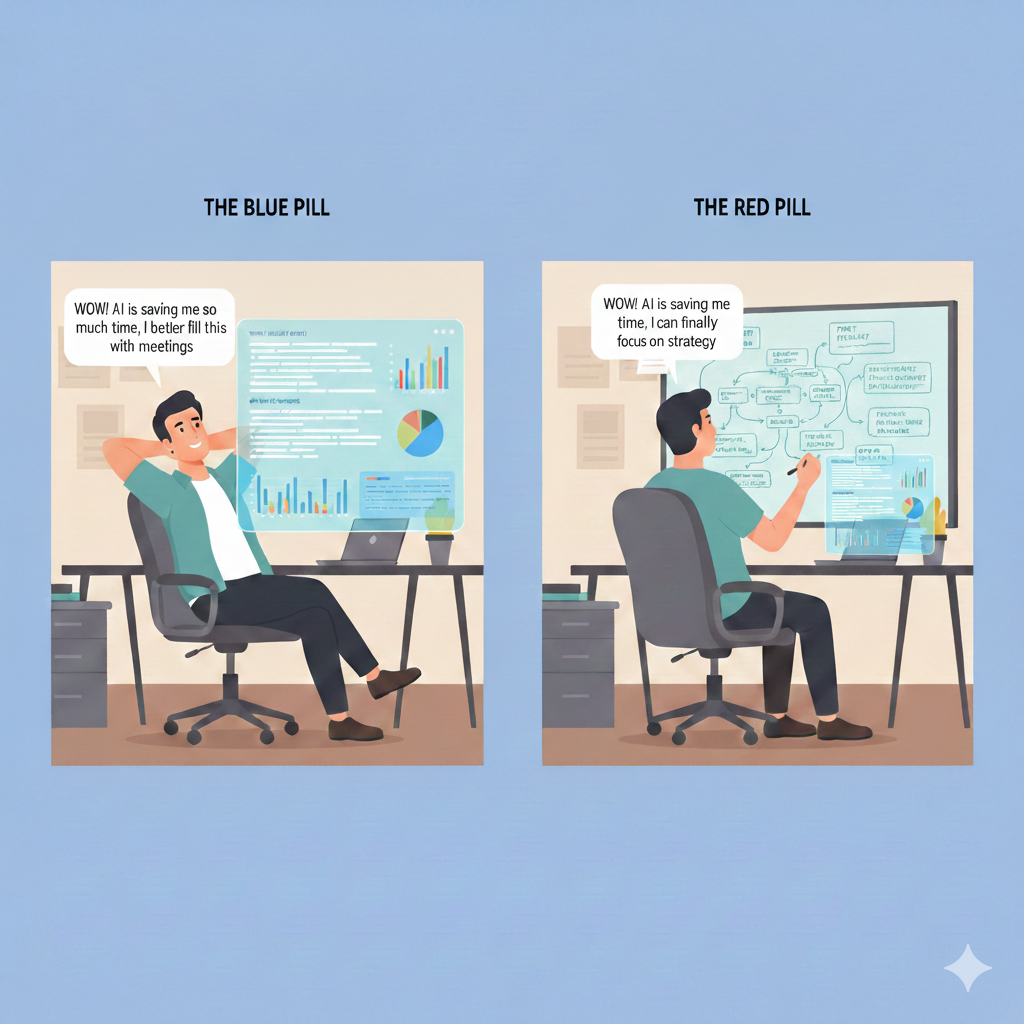
We are quickly moving toward a reality where “status” is automated and administrative overhead is handled by agents. This shift will leave us with a surplus of time. What we do with that reclaimed time will determine our future as leaders. Will we use it to attend more meetings, or will we use it to expand our leadership influence across the organization?
The Return of the Builder
One of the most exciting shifts I’m seeing is the opportunity for EMs to become builders again.
For years, many of us have felt a “technical drift.” We stopped building because the meetings became a full-time job. But as the cost of technical execution drops, the barrier to “building” drops with it.
We shouldn’t just be advocates for AI; we should be its most active practitioners.
-
Building Systems: We can move from guessing to simulating. Use AI to model how a team topology change might impact your lead time, or to ‘red team’ a new architectural proposal before a single line of code is written.
-
Building Tools: We can lead by example, building the very internal AI tools and “prompts” our teams need to thrive.
Staying technical is no longer just a “nice-to-have” or a hobby - it’s career insurance for the modern leader. Our influence is no longer measured by the size of our headcount, but by the sophistication of the systems we build.
How do you think our roles will evolve? If AI handled 50% of your administrative “toil” tomorrow, what is the one high-leverage project you would start?
Closing note - I suspect the ‘Manager to Engineer’ ratio is about to get much wider. If an Engineering Manager can finally spend 50% of their time building, do they still need a 1:8 ratio?